

Finding a book you want in a library is a necessary skill to being an independent library patron. Libraries have books organized alphabetically, by an author’s last name, and separate fiction from nonfiction; even if the library is genrefied.
As school librarians it’s important to teach our students to independently find books. These games and activities help students learn to:
- Search the library’s online catalog,
- Read an end cap or library signs,
- Practice numerical and alphabetical order.
- Know that fiction books are organized by an author’s last name, what letter that begins with, & how to use library signage to locate it.
- Know that nonfiction books are organized by general topics separated out by number prefixes.
These activities include:
- Station or Center Signs for every activity
- They are available to print in portrait or landscape mode so that you can put them in an acrylic sign holder or sheet protector.
- You can even laminate them and place them in a table top sign holder.
- 5 Dewey Decimal activities that help children practice using the library catalog, learning Dewey Decimal System, and locating books in the library.
- These are great to use over a couple of library classes.
- Give students a choice or have them rotate through the activities.
- Easily differentiate for your students by choosing activities that meet different abilities.
- Teacher Notes or Directions to help you set up and get organized.
5 Dewey Decimal Activities:
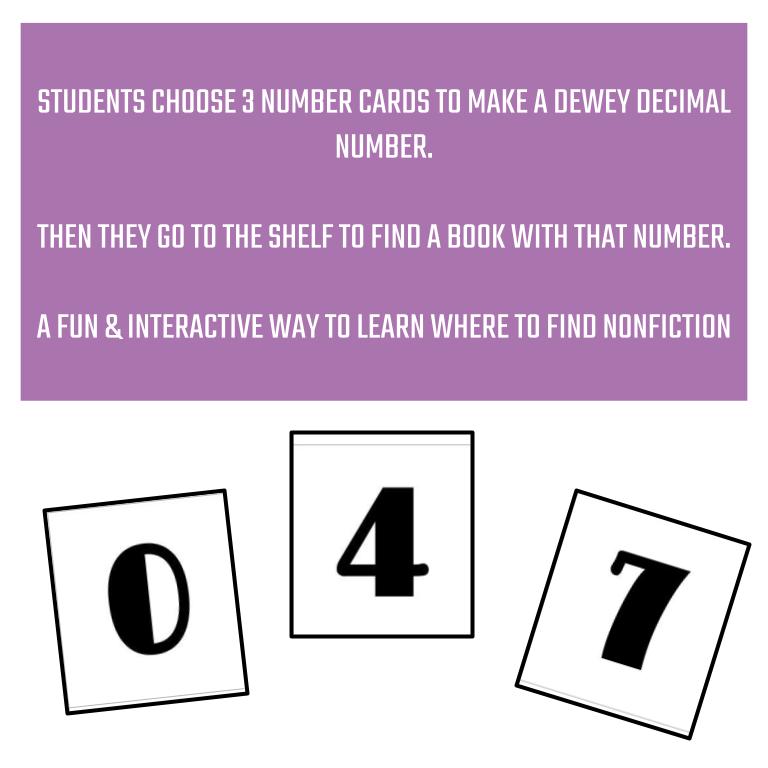
- Spine Label Draw: Students draw number cards and find a book that has those numbers on the spine label.
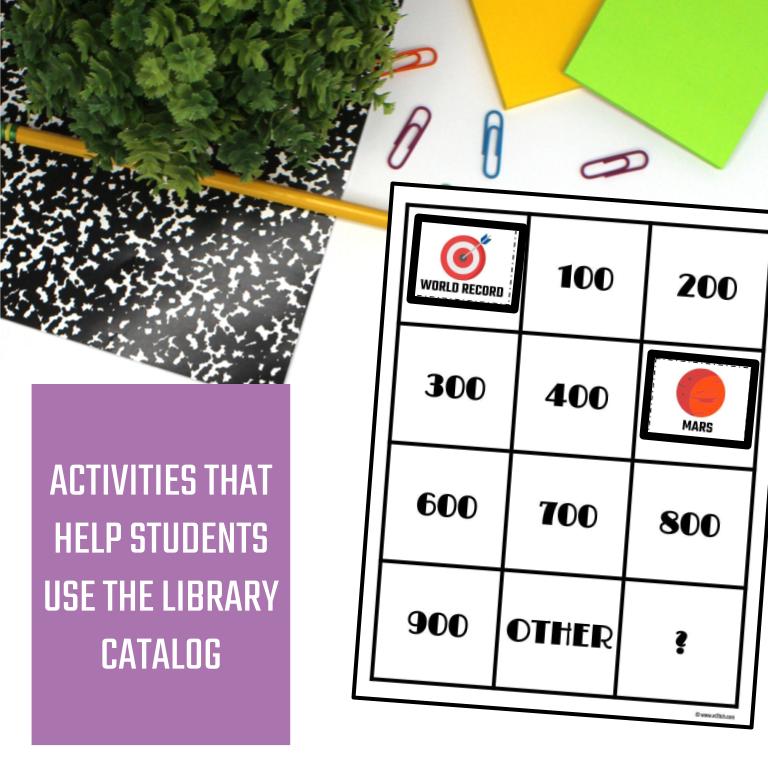
- Dewey Decimal Match: Students match topics to the Dewey Decimal number they’ most likely find it in.
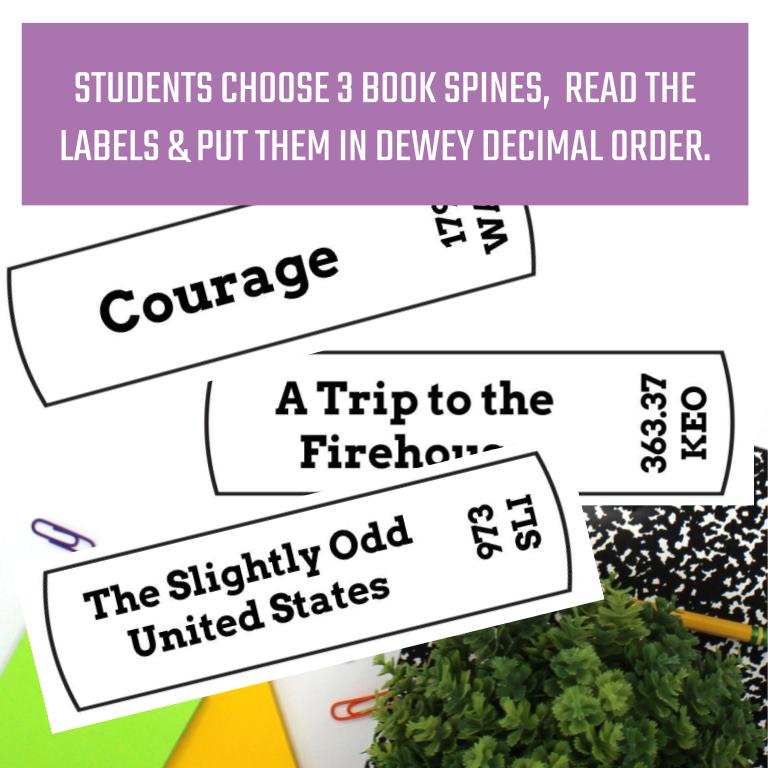
- Dewey Decimal Sort: Students sort book spines into proper shelf order.
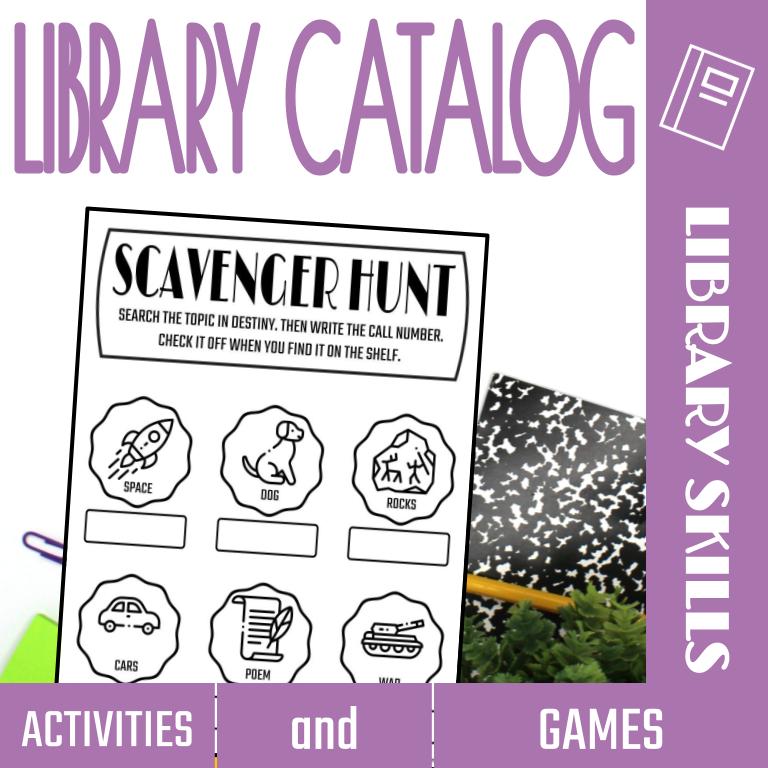
- Dewey Scavenger Hunt: Students use the library catalog to find books on popular topics.
- QR Code activity to play a shelving game online (Shelver from Mrs. Lodge)
Standards Addressed:
AASL National School Library Standards – See the AASL Standards Framework for Learners to view full text.
- Inquire – A.2. – C.1. – D.1. – D.3.
- Collaborate – A.1. – A.2. – B.1.
- Curate – B.4. – C.1.
- Explore – A.1. – C.1.
Common Core English Language Arts Standards –
© Copyright 2010 National Governors Association Center for Best Practices and Council of Chief State School Officers. All rights reserved.
- CCSS.ELA-Literacy.RF.2.1. – CCSS.ELA-Literacy.RF.3.1. – CCSS.ELA-Literacy.RF.4.1.
- CCSS.ELA-Literacy.RI.2.10. – CCSS.ELA-Literacy.RI.3.10. – CCSS.ELA-Literacy.RI.4.10.
- CCSS.ELA-Literacy.RL.2.10. – CCSS.ELA-Literacy.RL.3.10. – CCSS.ELA-Literacy.RL.4.10.
Terms of Use
© Vr2l Tch – By purchasing this product, you receive a one-user license. Copying or distributing to others is prohibited. See our Site Terms of Use for more information. For teacher-librarians: You may use this product with all of your classes and students.
Questions before buying? If the free preview file does not answer your question, you can contact us through this link with questions.
Deirdre Jameson (verified owner) –
I was looking for a different way to introduce catalog searching. The kids loved these games.
Deirdre Jameson (verified owner) –
I was looking for a new way to practice using the library catalog. These games were it. The kids loved them.